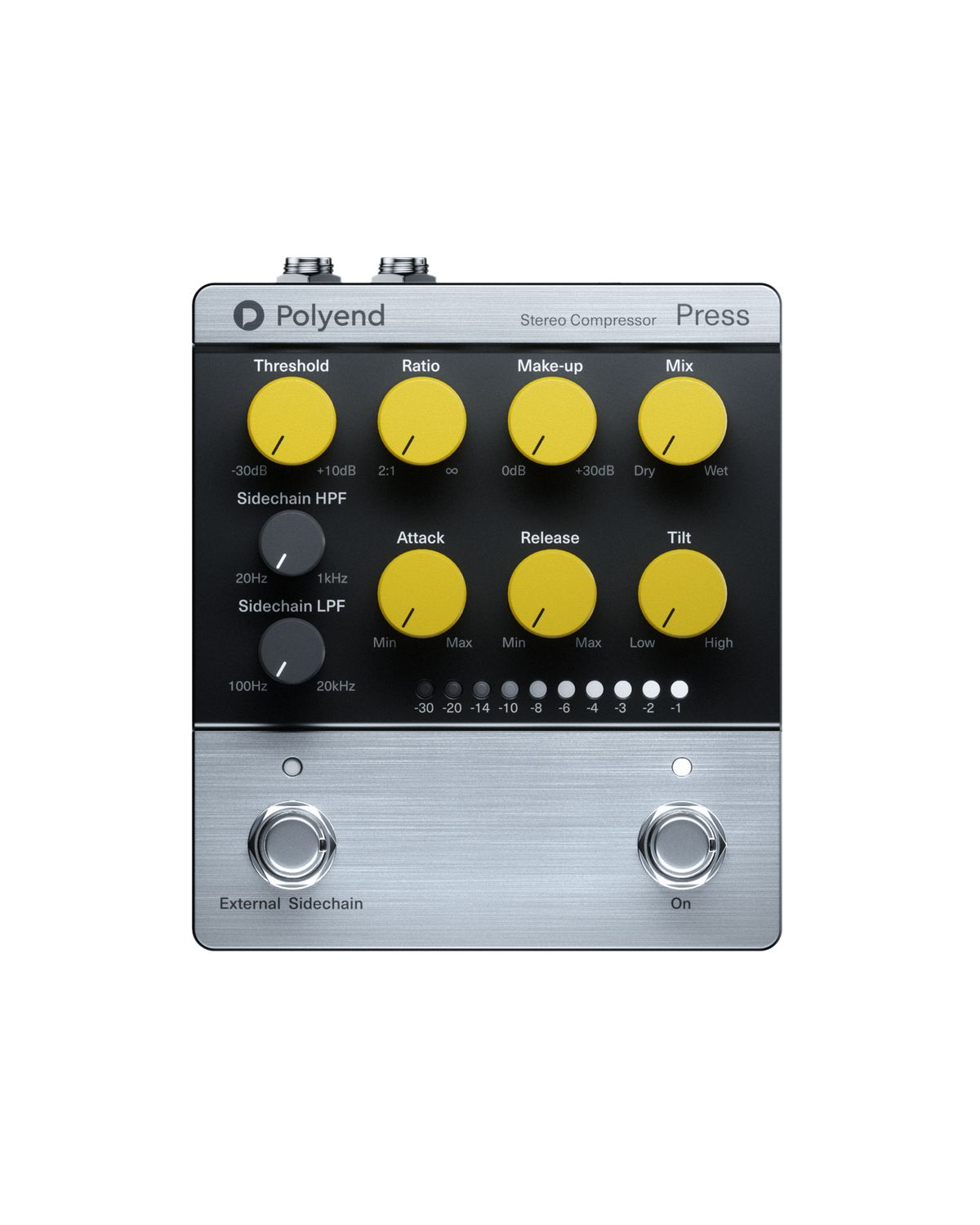
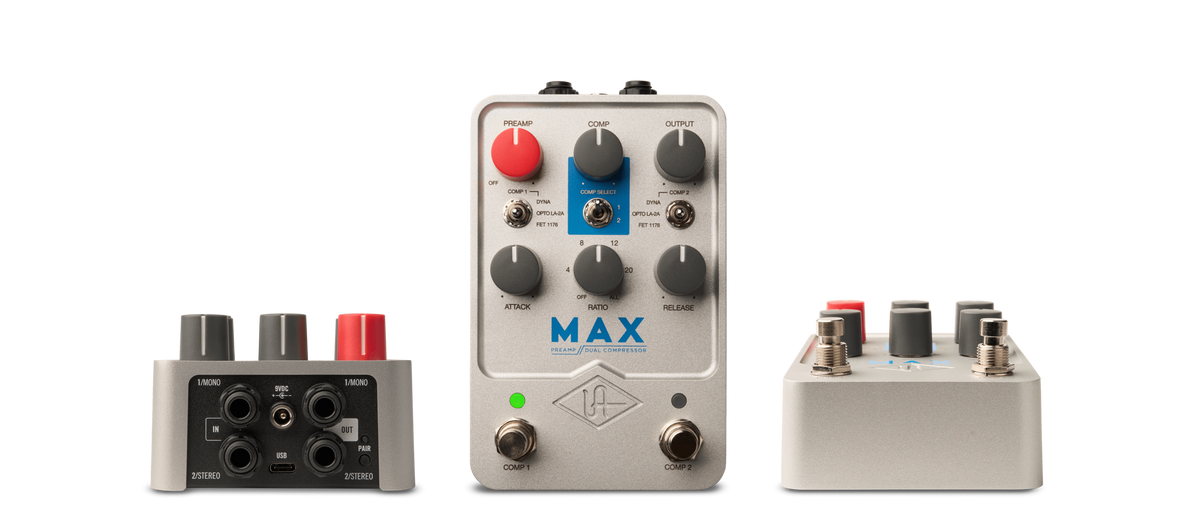
A compressor is the effect that makes many records sound finished. We stock 19 of them from 9 brands, including .
What a compressor does
A compressor turns down signals above a set level and, with makeup gain, brings the overall level back up. Loud notes become quieter, quiet notes come forward, and sustaining notes last longer. Good compression is felt more than heard: your playing sounds more even and confident.
Controls to compare
Threshold or sensitivity: how loud the signal must be before compression starts
Ratio: how strongly loud signals are turned down
Attack: how quickly it reacts; a slower attack lets the pick attack through
Release: how quickly it lets go
Blend: mixes in dry signal for parallel compression that keeps dynamics natural
Simple pedals combine some of these into one or two knobs. That is easier to set but less flexible.
Compressor types
Optical compressors respond smoothly and gently, a favourite for subtle always-on use. VCA designs are precise and transparent. FET-style circuits react quickly and add a little colour. Classic squash-style pedals clamp down hard for the snappy country and funk sound.
Placement and bass
Most players put the compressor near the start of the chain, after the tuner and wah, to even out the signal before drive. After drive, it controls the overall level but can raise noise. Bass players benefit greatly from a compressor; a blend control keeps the attack intact while the low end stays steady.
Before you buy
Decide between subtle levelling or obvious squash
Look for attack and blend controls
Check noise at high gain settings
Check whether it suits bass if you play both
Decide where it sits in relation to drive
Frequently asked questions
What does a compressor pedal do?
It reduces the difference between loud and quiet notes, making your playing more even and adding sustain.
Do I need a compressor pedal?
Not for every style. It is especially useful for clean funk, country and pop guitar, for slide, and for bass.
Where does a compressor go in my pedal chain?
Usually after the tuner and wah and before drive. Some players put it after drive or at the end to control overall level.
What does the blend control do on a compressor?
It mixes your uncompressed signal back in, which keeps the natural attack of your notes while adding sustain.
Should I use a compressor on bass?
Many bass players do, because it keeps notes at a steady level in the mix. Look for a model that keeps the low end full.
Can I leave a compressor on all the time?
Yes, at gentle settings many players do. At heavy settings it is better switched in for specific parts.