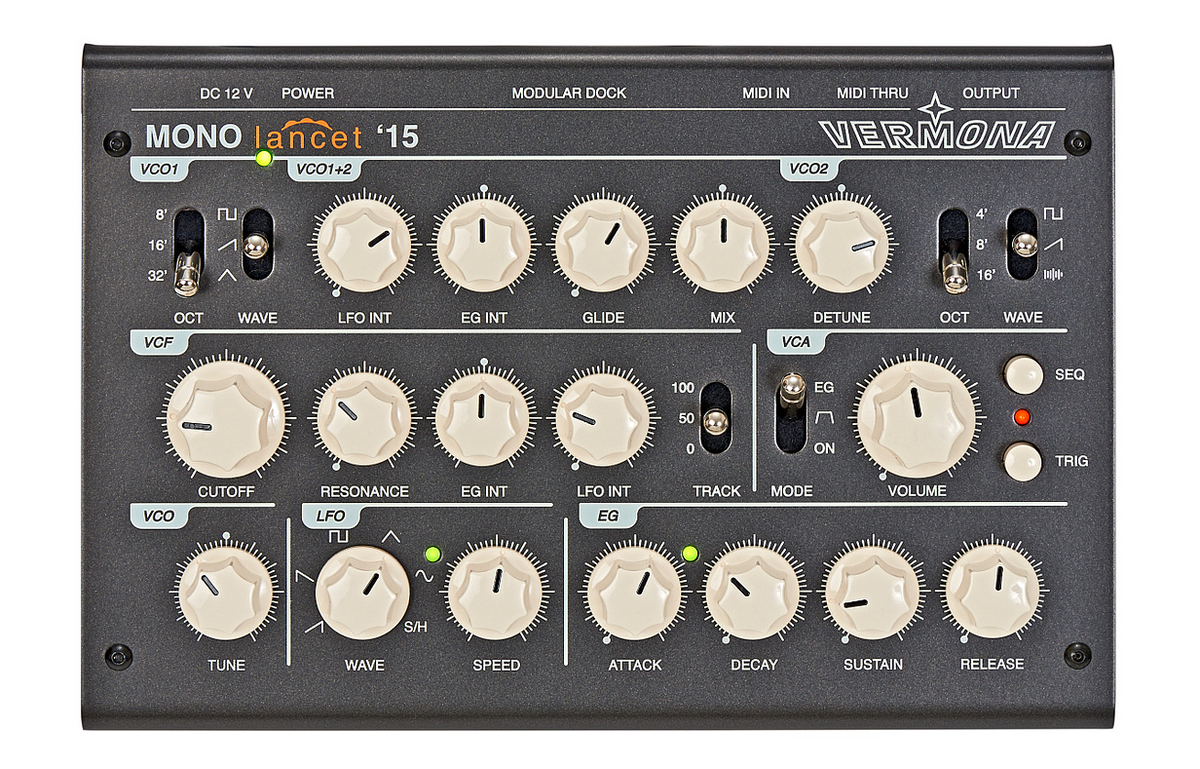
Desktop synthesizers pack a full synth engine into a box for your desk, rack or backpack. We stock 71 of them from 30 brands, including .
Why go desktop
Without keys, a synth is cheaper, smaller and easier to fit into a crowded studio or a travel setup. You play it from the keyboard you already own, from a hardware sequencer or straight from your DAW. Many desktop synths include their own sequencer, so they make music on their own.
How to play it
Connect any MIDI keyboard to the synth's MIDI input, or plug it into your computer over USB and play it from your DAW. For computer-free jamming, pair it with a groovebox or sequencer and sync everything with MIDI clock.
What to compare
Look at the engine (analog, wavetable, FM, sample-based), the number of voices, the built-in sequencer and the connections. Some desktop units are Eurorack-compatible, with patch points or a removable case, which makes them a good bridge to modular.
Before you buy
Plan how you will play it: keyboard, sequencer or DAW
Check for a built-in sequencer if you want it to run on its own
Check MIDI in and out (5-pin or TRS)
Look at power: USB, battery or adapter
Check audio outputs and headphone level
Frequently asked questions
Do desktop synths need a keyboard?
To play notes by hand, yes. Many include a sequencer or touch keys, and you can always play them from a DAW.
Can a desktop synth work with modular?
Many have CV/gate or patch points. Some can even be mounted in a Eurorack case.
Does a desktop synth sound worse than a keyboard version?
No. Usually it is the same engine without the keys.