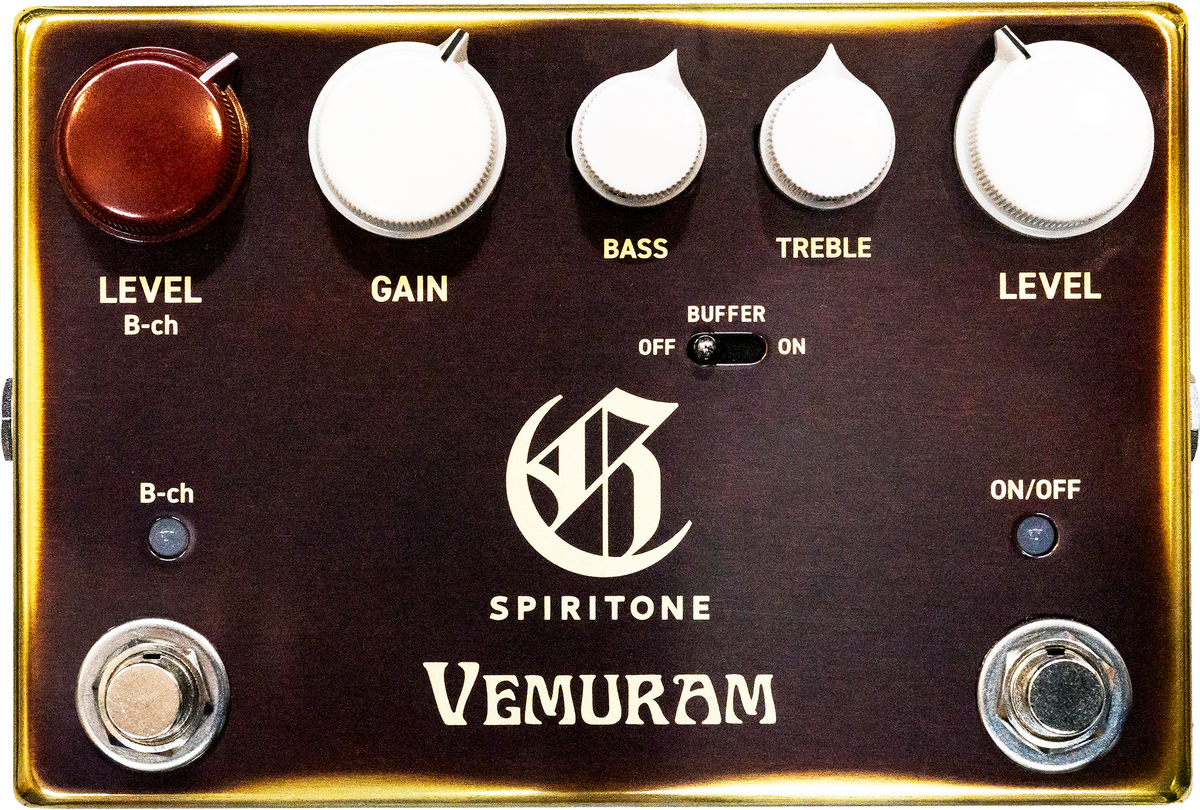
Overdrive is the drive most players reach for first, from a subtle edge to a full rock crunch. We stock 60 of them from 12 brands, including .
What overdrive does
An overdrive clips your signal gently, rounding the peaks off rather than chopping them. That keeps it dynamic: pick lightly and it cleans up, dig in and it growls. Overdrive is built to feel like a valve amp pushed into breakup, which is why it pairs so well with amps that are already set on the edge.
Voicing: mid-hump or transparent
Many classic overdrives have a mid-range boost that helps a guitar cut through a band and tightens the low end. Others are voiced to be transparent, keeping your guitar and amp's character and simply adding gain and drive. Some have an always-on character of their own, with a fuller low end and a smoother top. Listen for the mids first; that is where overdrives differ most.
Gain range and headroom
Low-gain overdrives work as a thickening always-on pedal or as a boost into another drive. Higher-gain designs reach classic rock and blues lead tones on their own. Some pedals accept 18V, which gives more headroom: the pedal clips later and sounds more open and punchy. Check the manual before running any pedal above 9V.
Using overdrive with your rig
Into a clean amp, set the pedal for the full sound you want.
Into a slightly driven amp, keep the pedal's gain low and its level up.
Stacked with another drive, place the lower-gain pedal first.
With bass, look for a blend or clean control.
Before you buy
Decide between a mid-focused or transparent voice
Check the gain range for your style
Try it into a clean and a slightly driven amp setting
Check whether it runs at 18V for extra headroom
Look for a bass or tone control that suits your guitar
Frequently asked questions
What does an overdrive pedal do?
It adds warm, soft clipping that reacts to how hard you play, similar to a valve amp being turned up.
What is a transparent overdrive?
An overdrive voiced to keep the tone of your guitar and amp, adding gain without the strong mid-range colour of classic designs.
Can I leave an overdrive on all the time?
Yes. Many players keep a low-gain overdrive on as part of their basic sound and control it with the guitar's volume knob.
Can I run an overdrive pedal at 18V?
Only if the manufacturer says it is designed for it. Pedals that accept 18V gain headroom and sound more open.
Which overdrive is best for blues?
Look for a pedal with low to medium gain, a dynamic response that cleans up with your volume knob and a mid-range voice that suits your amp.
Is an overdrive pedal good for beginners?
Yes. It is one of the most useful first pedals, because it adds a usable crunch to almost any clean amp.