


Drive & distortion
Overdrive, distortion and fuzz add gain and harmonics, from a warm push to a saturated wall of sound.
Good if your tone sounds too clean or flat.
Usually goes early in the chain.


Guitar and synth pedals, multi-effects, amp modellers and everything needed to build a pedalboard: drive, delay, reverb, modulation, pitch and dynamics. Effects pedals are not only for guitar; many work just as well with synths, drum machines and vocals. This page explains the main effect types, the order to put them in and what a working board needs. Many pedals can be tried in our Rotterdam showroom.
Highlights


Start here
Most pedals fall into four families. Knowing which family you need narrows the choice fast.
Overdrive, distortion and fuzz add gain and harmonics, from a warm push to a saturated wall of sound.
Good if your tone sounds too clean or flat.
Usually goes early in the chain.
Delay repeats what you play, reverb adds space, loopers record a phrase and play it back so you can layer.
Good if you want depth, ambience or solo layering.
Usually goes at the end.
Chorus, flanger, phaser, tremolo and vibrato move the sound in time or pitch for width and motion.
Good if your sound feels static.
Usually goes after drive, before delay.
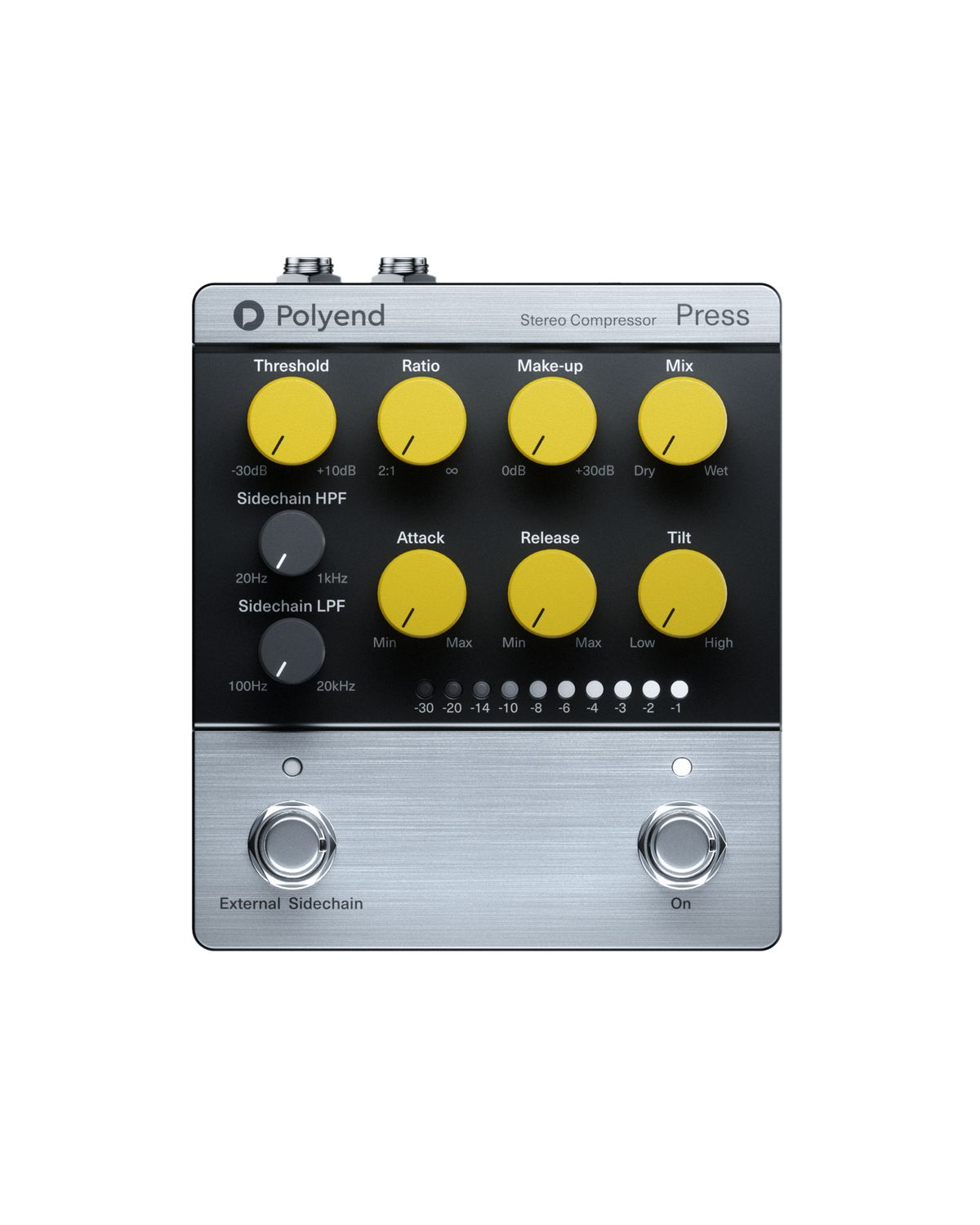
Octavers, harmonizers, synth pedals, wahs, compressors, EQs and noise gates shape pitch, tone and level.
Good if you need control or something unusual.
Usually goes at the start.
First setups
What a first setup usually looks like, depending on how you play.
One box
A multi-effects unit or amp modeller covers drive, modulation, delay, reverb and amp sounds in one box, often with a headphone output and USB recording.
Classic board
Pick a board, a power supply with isolated outputs and short patch cables, then add pedals one at a time.
Beyond guitar
Delay, reverb and modulation pedals bring character to synths and drum machines. Look for stereo inputs and line-level handling.
Category guide
Effects are grouped by what they do to the signal. Here is what you will find in each group and the types inside it.
Drive pedals add gain and saturation. Overdrive keeps the character of your instrument and pushes an amp into breakup, distortion gives a thicker, more compressed sound, and fuzz squares off the signal for a raw, buzzing tone. Boosts and preamps raise level without changing the sound much.
Delays repeat the signal: tape and analog delays sound warm and darker, digital delays clean and precise. Reverbs simulate rooms, halls, plates and springs, from a natural touch to huge ambient washes. Loopers record a phrase and play it back so you can build layers on stage or practise over your own parts.
Modulation effects move the signal over time. Chorus thickens and widens, flangers and phasers sweep through the frequency range, tremolo pulses the volume and vibrato bends the pitch. Rotary simulators recreate the spinning speaker of an organ.
Pitch pedals shift, double or harmonize what you play: octavers add notes above or below, harmonizers follow a key, and whammy-style pedals bend pitch with a treadle. Synth and filter-based pedals turn a guitar or bass into something closer to a synthesizer.
Compressors even out the level and add sustain, noise gates cut hum and hiss between notes, EQ pedals shape the tone, and wahs and envelope filters sweep a filter by foot or by playing dynamics. Volume and expression pedals control level and parameters on other pedals.
Multi-effects units combine dozens of effects with presets you recall by footswitch. Amp modellers and capture devices recreate amplifiers and speaker cabinets, so you can record or play live straight into a PA or audio interface without a real amp.
Everything that makes a board work: pedalboards and cases, power supplies, patch cables, switchers and loopers, buffers, DI boxes and expression pedals. Good power and short, reliable cables solve most noise problems.
Guitar amplifiers and cabinets, from compact practice amps to valve heads and combos. Many practice amps include effects and a headphone output.
Buying guide
Six things that decide whether a board sounds good and stays quiet.
The common starting order is tuner, dynamics and filters, then drive, then modulation, then delay and reverb. There are no strict rules, but this order keeps each effect working on a clean input.
Most pedals run on 9V DC with a centre-negative plug, but current draw varies from a few mA to more than 500 mA for digital pedals. An isolated power supply removes most hum and lets you mix pedals that need 9V, 12V or 18V.
Count your pedals, add one or two for growth, and lay them out on the floor before choosing a board. Leave room for the power supply underneath and space between footswitches.
Stereo delays, reverbs and modulation sound much wider, but need two outputs, two amps or a stereo input on your mixer or interface. Synth players usually benefit most from stereo.
True bypass pedals take themselves out of the signal when off; buffered pedals keep the signal strong over long cables. With many pedals or long cables, one good buffer at the start of the chain keeps the tone bright.
Guitar pedals expect instrument level. Synths, drum machines and mixer sends run at line level, which can overload some pedals. Look for pedals with a line or synth mode, or use a re-amp or level box.
Glossary
The words you will meet on pedal pages and in manuals.
A good start is tuner, compressor and filters, then drive, then modulation, then delay and reverb at the end. Experiment from there; some sounds come from breaking the rules.
Usually because of power. Daisy-chained supplies share a ground; an isolated power supply and short, good-quality cables solve most hum and noise.
Yes. Delay, reverb, modulation and many drive pedals sound great on synths and drum machines. Keep an eye on level: synths run hotter than guitars, so turn down the synth output or use pedals with a line-level mode.
Pedals give hands-on control and let you build a board one piece at a time. A multi-effects unit gives many effects, presets and amp sounds in one box for less money and less space.
Check each pedal's voltage, polarity and current draw on its product page. Choose a supply with enough outputs and enough mA per output, ideally isolated.
Yes. Most amp modellers and multi-effects units have a USB audio connection or line outputs, so you can record straight into a computer or audio interface.
Yes. Pedals marked “In Store” are in our Rotterdam showroom at Oude Binnenweg 38, where you can play them through an amp or into headphones.
Rotterdam showroom
Volt Music Store is an independent shop for synths, modular, studio and DJ gear, with a showroom at Oude Binnenweg 38 in Rotterdam since 2022. Our effects & pedals range covers 543 products from 36 brands, from classic stompboxes to boutique and synth-friendly pedals.
Everything marked “In Store” is on the shelf and can be tried before you buy. In-store stock ordered before 15:00 on a working day is dispatched the same day, and delivery in the Netherlands is free above €150. We also run free events in the showroom, from workshops to brand evenings.


