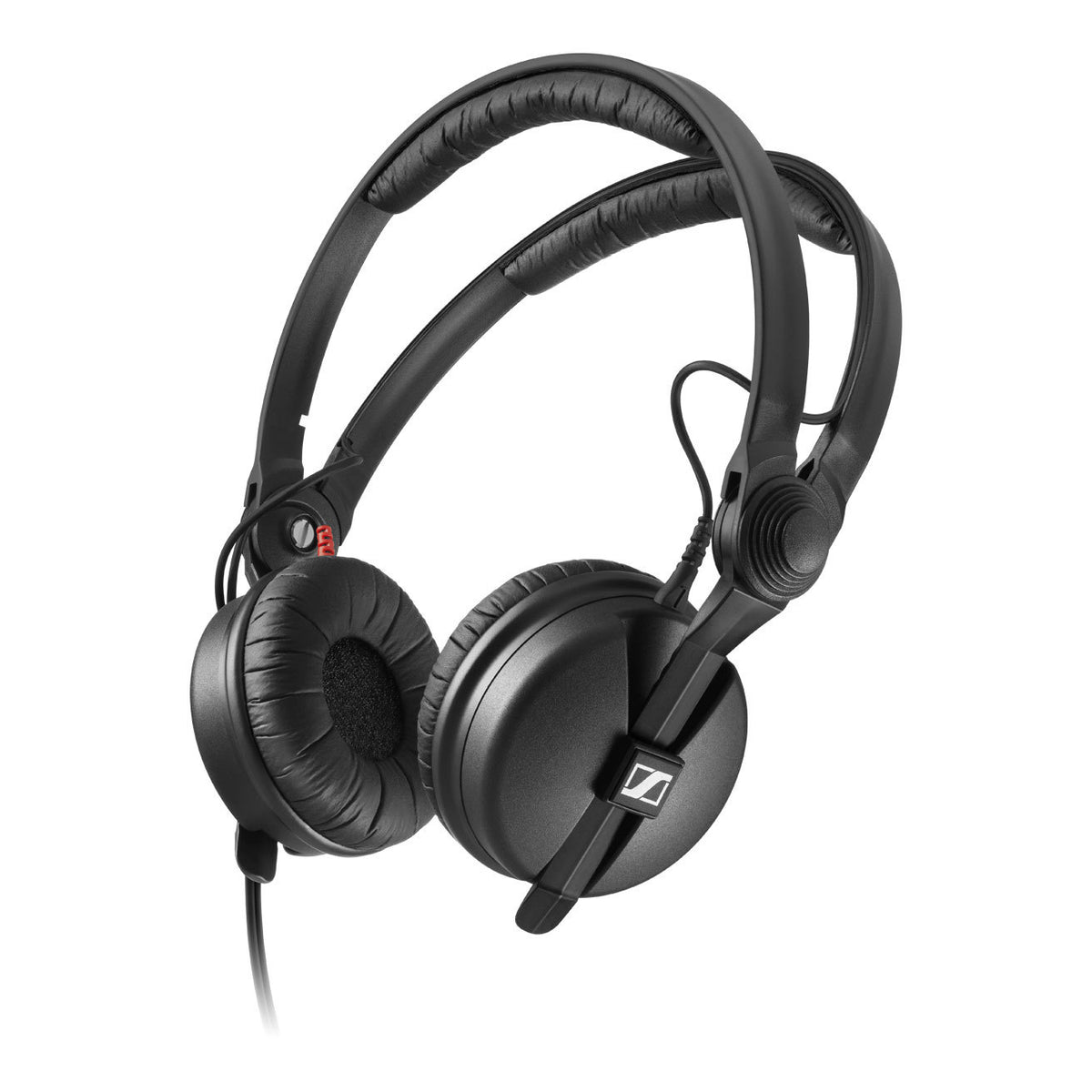
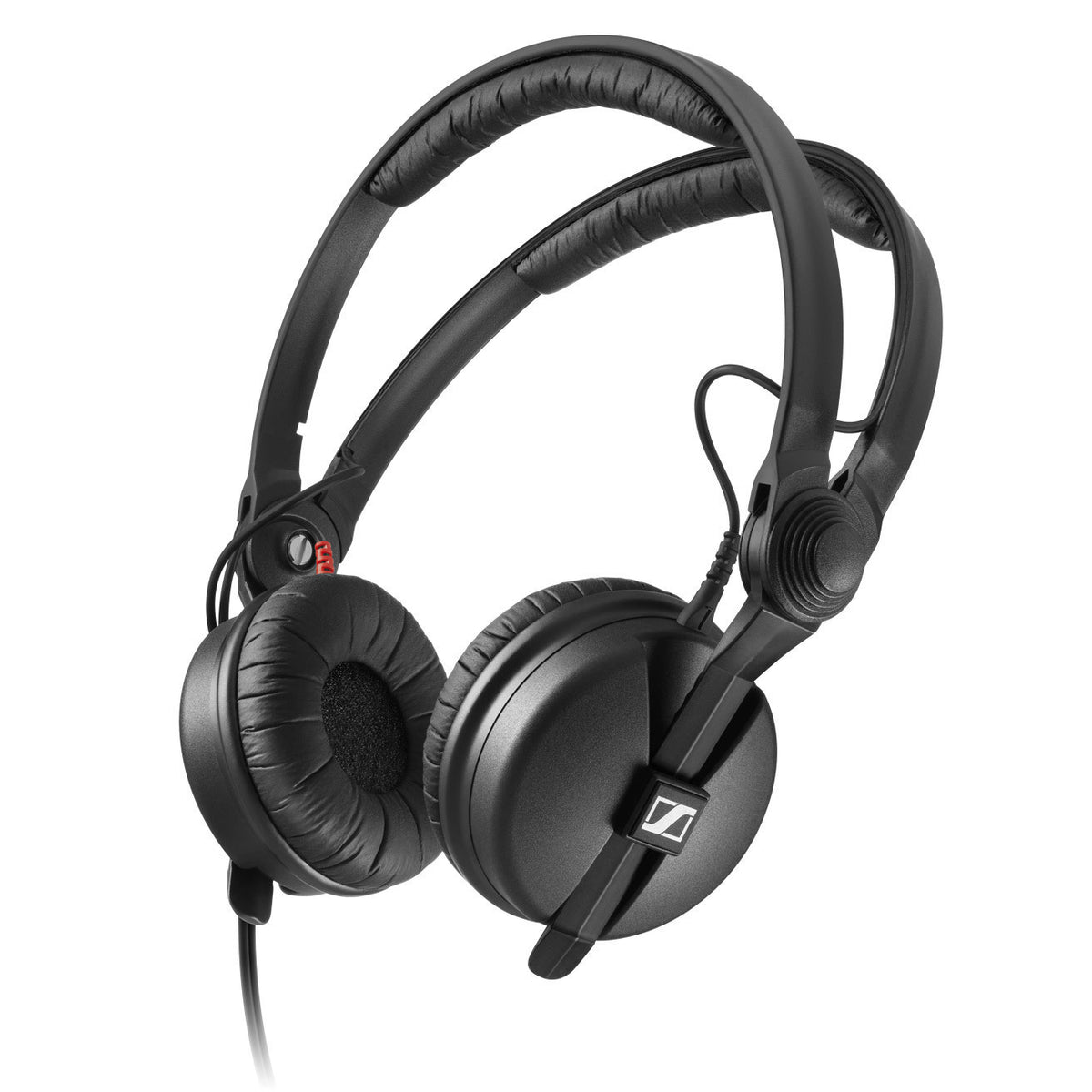
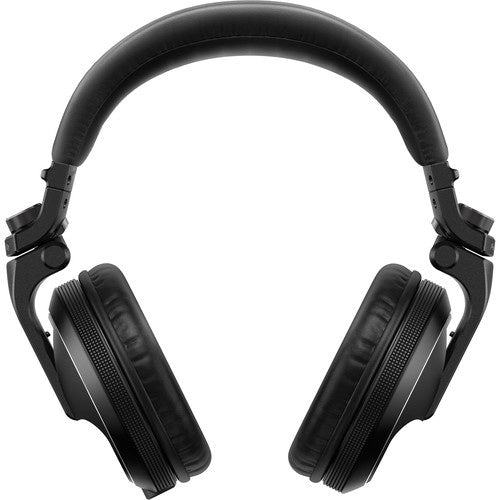
DJ headphones let you hear the next track over a loud room. We stock 23 of them from 8 brands, including .
Isolation and volume
In a booth you cue the next track while the main system plays loudly around you. DJ headphones are therefore closed-back with a firm seal, so outside sound stays out and your cue stays clear without turning it up to harmful levels. High sensitivity helps them reach good volume from a mixer's headphone output.
Built for one-ear monitoring
Many DJs hold one earcup to their ear and leave the other off. Swivelling or rotating earcups make this comfortable, and a headband that folds lets the headphones rest on your shoulders. Look for a sturdy hinge, because this is where headphones tend to break. Lightweight models are easier to wear through a long set, while heavier ones often feel more solid.
Cables and spare parts
A coiled cable stretches when you move around the booth and stays out of the way when you do not. A detachable cable can be replaced in seconds if it fails. Replaceable earpads and headbands keep a good pair going for years. Leatherette pads seal well and wipe clean; velour pads are cooler but isolate slightly less.
Sound
DJ headphones usually have a stronger low end so you can hear the kick drum clearly for beatmatching. That is useful for cueing, but they are not always the most neutral choice for mixing music in a studio. If you also produce, consider a second, more neutral pair from our Headphones range.
Before you buy
Choose a closed-back design with good isolation
Check that the earcups swivel for one-ear monitoring
Look for a detachable or coiled cable
Check that earpads and cables are replaceable
Try them on for comfort over a long set
Frequently asked questions
Why are DJ headphones closed-back?
Closed-back earcups block outside noise and keep sound in, so you can hear your cue over a loud room without turning it up too far.
Can I use DJ headphones for music production?
Yes, for general listening and checking, but many DJ models have an emphasised bass. For detailed mixing, neutral studio headphones or monitors are more reliable.
Are wireless headphones good for DJing?
Generally no. Bluetooth adds a delay that makes beatmatching in your headphones difficult, so wired headphones are the standard.
What impedance should DJ headphones have?
Low to moderate impedance with high sensitivity is typical, so they play loudly from mixers, controllers and laptops.
Do I need a 3.5 mm or 6.35 mm jack for DJ headphones?
Most DJ mixers and controllers use 6.35 mm, while laptops and phones use 3.5 mm. Many DJ headphones include a screw-on or snap-on adapter.
Can I try DJ headphones before I buy?
Yes. Products marked In Store are on the shelf in our Rotterdam showroom at Oude Binnenweg 38, where you can try them.