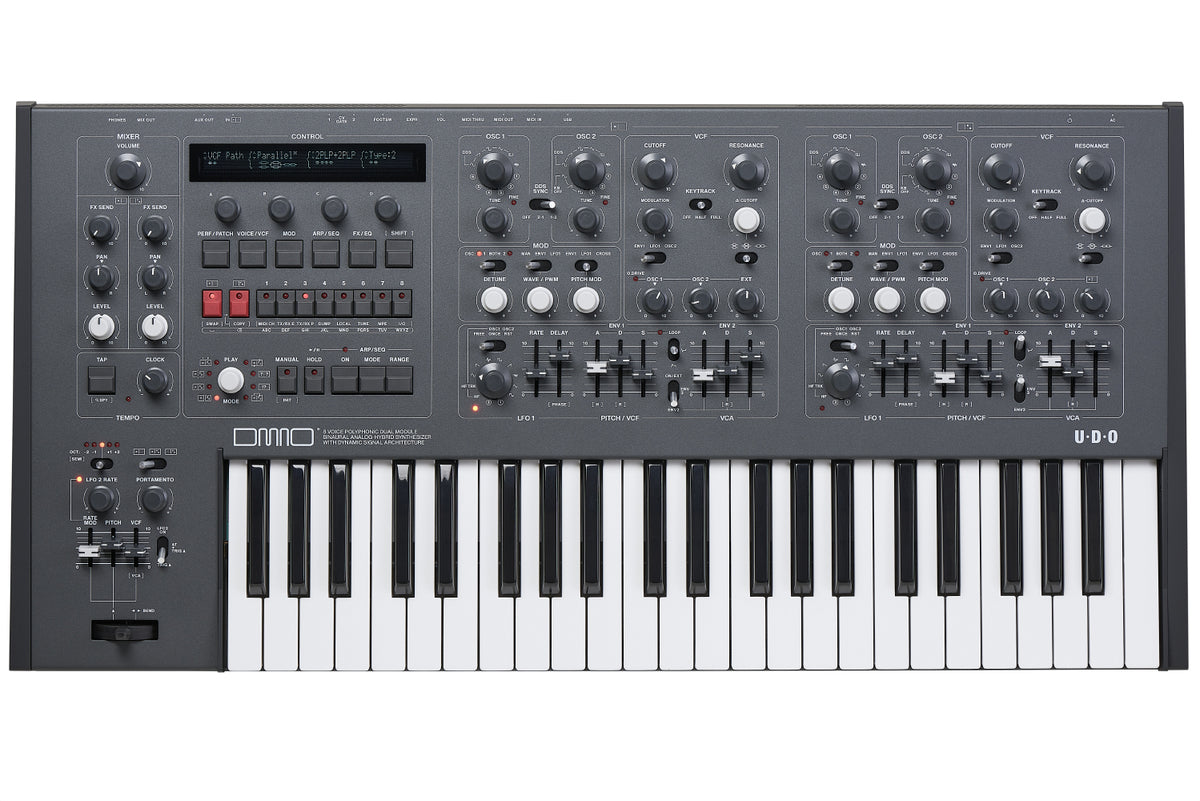
A keyboard synthesizer combines a sound engine and keys in one instrument, so you can switch it on and play. We currently stock 72 keyboard synths from 14 brands, including .
Why choose a keyboard synth
Everything you need to play is in one box: keys, controls and the sound engine. That makes keyboard synths the easiest choice for players who want to perform, record parts by hand or use a synth on stage without extra gear. Many also work as a MIDI controller for your other instruments.
Keys and expression
Compact models have 25 or 37 keys, often in a smaller size, and suit bass and lead lines. 49 and 61 keys give room for two-handed playing. Look for velocity and aftertouch if you want expressive control; some recent synths add poly aftertouch or MPE for per-note expression.
Voices and engines
Monophonic keyboard synths excel at bass and leads; polyphonic ones handle chords and pads. Engines range from classic analog subtractive to wavetable, FM and hybrid designs. Bi-timbral or multitimbral synths can play a split or layer two sounds at once, which is useful live.
Before you buy
Choose key count and size for your space and style
Decide on mono or polyphonic
Check velocity and aftertouch
Look for split and layer if you play live
Check outputs and whether audio over USB is included
Frequently asked questions
Is a keyboard synth better than a desktop synth?
Not better, more complete. You pay for the keys and the case; in return you can play it without any other gear.
Can I use a keyboard synth as a MIDI controller?
Most can. Check that local control can be switched off and that it has MIDI or USB-MIDI out.
How many voices do I need?
Four to eight voices are enough for most chords and pads. Sixteen or more help with long releases and layered sounds.