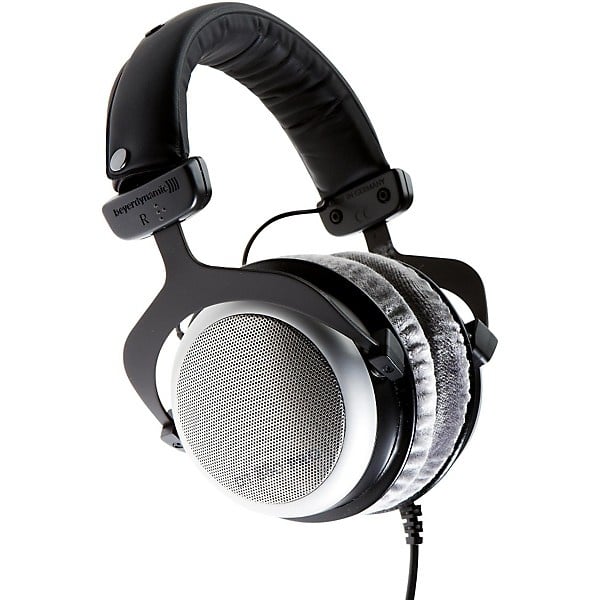
Open-back headphones let sound and air pass through the cups for a natural, speaker-like presentation. We stock 30 of them from 9 brands, including .
Why open-back
With no sealed chamber behind the driver, open-back headphones avoid many of the resonances that closed cups can create. The result is usually a wider, more natural stereo image and a more relaxed sound, which makes it easier to judge reverb, panning and balance. They also tend to feel cooler and lighter on long sessions.
The trade-off
Open-back headphones leak sound in both directions. People nearby will hear what you are listening to, and you will hear the room. That rules them out for recording near a live microphone and makes them less suited to noisy spaces or travel. Semi-open designs sit in between, with partial isolation.
The open design also makes the bass feel lighter than on many closed models, because there is no sealed air volume to support it. Good open-back headphones still reach low, but the bass tends to be more natural than punchy.
What to compare
Tonal balance: neutral, or slightly warm or bright for your taste
Impedance and sensitivity: many open-back models need more drive
Comfort: weight, clamping force and pad material
Cable: detachable, length and connector type
Build quality and the availability of spare pads
Using them for mixing
Headphones exaggerate stereo separation compared with speakers, and bass can be felt differently. Check your mixes on monitors or other systems as well, and use reference tracks you know well to calibrate your ears to the headphones.
Before you buy
Make sure your listening room is quiet enough
Check whether your interface can drive the impedance
Consider a headphone amplifier for high-impedance models
Try the comfort over a longer listening session
Plan to check mixes on speakers as well
Frequently asked questions
What are open-back headphones good for?
Mixing, mastering, editing and long listening sessions in a quiet room, where their natural, spacious sound makes balance and stereo decisions easier.
Can I record vocals with open-back headphones?
It is not recommended. The headphone mix leaks out and can be picked up by the microphone, especially with sensitive condensers.
Do open-back headphones need an amplifier?
Some do. High-impedance or low-sensitivity models may need a headphone amplifier or an interface with a strong headphone output to sound their best.
Are open-back headphones better than closed-back?
Neither is better overall. Open-back headphones usually sound more natural; closed-back headphones isolate. Choose by what you do and where you do it.
Can people hear my open-back headphones?
Yes, at normal listening levels people nearby will hear what you play. That is why they are best used at home or in a quiet studio.
Can I use open-back headphones for gaming or watching films?
Yes. Their wide stereo image works well for films and games, as long as you are in a quiet room and nobody minds the leakage.