






Buying guide
Shotgun microphones: a buyer's guide
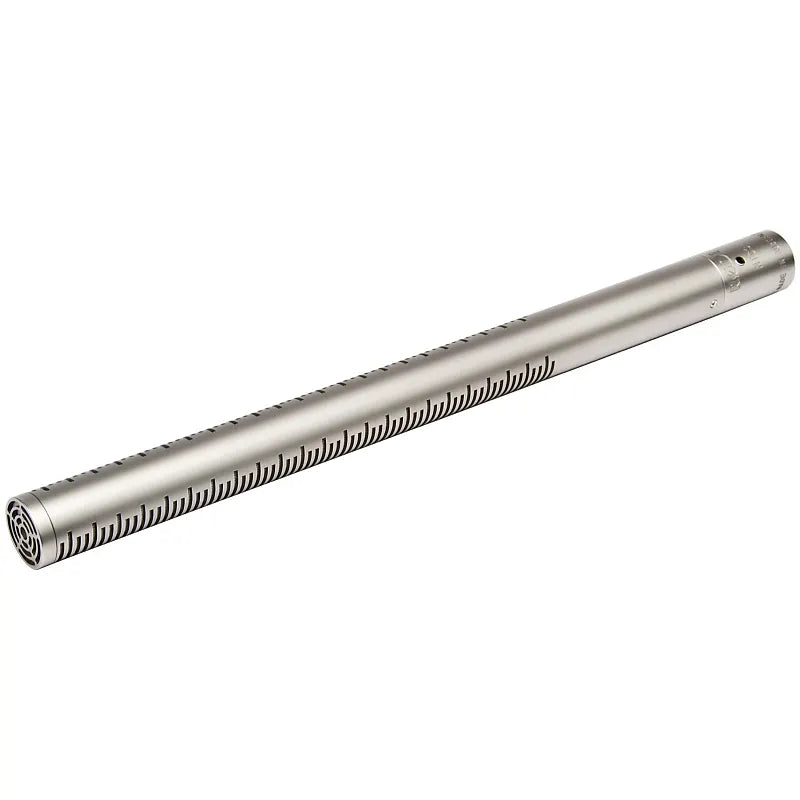
Shotgun microphones focus on what they point at and reject much of the sound from the sides, which is why they are the tool of choice on film sets. We stock 19 of them from 3 brands, including .
Before you buy
- Decide whether you mostly shoot indoors or outdoors
- Choose the length to suit your working distance
- Check phantom power or battery options on your recorder or camera
- Plan a boom pole, shock mount and XLR cable
- Add a windshield suitable for outdoor work
Frequently asked questions
What is a shotgun microphone used for?
Recording dialogue and sound for film, video and broadcast, usually from a boom pole just out of shot. Its narrow pattern helps reject background noise from the sides.
Do shotgun microphones need phantom power?
Most professional models do, via XLR from a recorder or mixer. Some can also run on an internal battery.
Can I use a shotgun microphone indoors?
Yes, but short shotguns or hypercardioid microphones often sound more natural in small, reflective rooms than long shotguns.
Can I connect a shotgun microphone to my camera?
Yes, if the camera has XLR inputs with phantom power, or through an XLR adapter. Cameras with only a 3.5 mm input usually need an adapter with its own preamp or a camera microphone instead.
Is a shotgun microphone good for YouTube or podcasts?
For video where the microphone must stay out of shot, yes. For podcasts at a desk, a cardioid microphone used close up is usually simpler and sounds fuller.
How do I reduce wind noise on a shotgun microphone?
Use a furry windshield or a full blimp outdoors, engage the low-cut filter and use a shock mount to reduce handling noise.
Can I try shotgun microphones before I buy?
Yes. Products marked In Store are on the shelf in our Rotterdam showroom at Oude Binnenweg 38, where you can try them.