


Synthesizer
Builds sounds from oscillators, filters and envelopes. Every knob changes the sound itself.
Good if you want to design your own sounds.
Makes sound by itself? Yes.


Synthesizers, keyboards, drum machines, samplers and MIDI controllers for playing, programming and creating electronic music. Whether you are buying a first synth, a digital piano to learn on or a groovebox for a live set, this page explains the main types and helps you choose. Many of these instruments can be played in our Rotterdam showroom.
Highlights




Start here
Four kinds of instrument live here. They look alike but do different jobs.
Builds sounds from oscillators, filters and envelopes. Every knob changes the sound itself.
Good if you want to design your own sounds.
Makes sound by itself? Yes.
Makes beats and plays back recorded sounds, with a sequencer to build patterns and whole tracks.
Good if you want to make music without a computer.
Makes sound by itself? Yes.
Weighted keys and realistic piano, organ and electric piano sounds.
Good if you play or are learning piano.
Makes sound by itself? Yes, most have speakers or a headphone output.
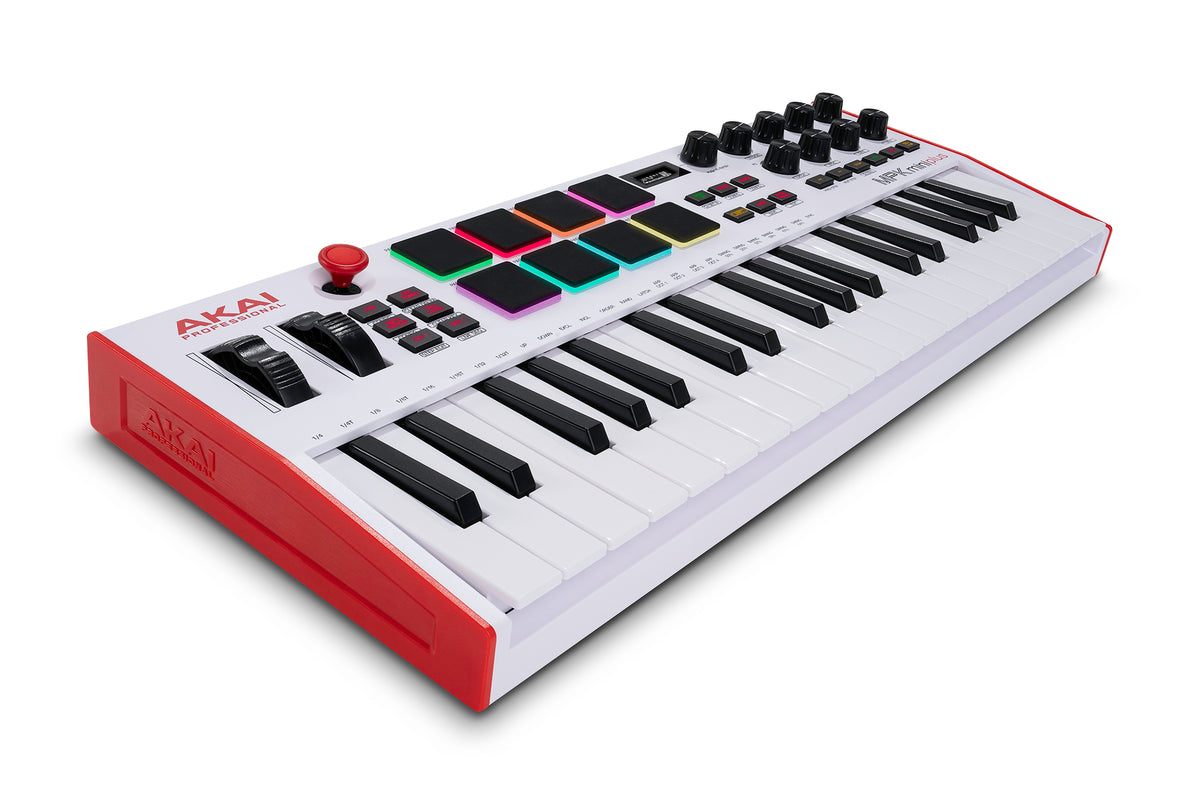
Keys, pads and knobs that play and control software instruments in your DAW.
Good if you already produce on a computer.
Makes sound by itself? No, it needs a computer or another instrument.
First setups
What a first setup usually needs besides the instrument.
Computer-based
Software makes the sound; hardware gives you hands-on control and a better way to play it.
Computer-free
A groovebox sets the beat, a desktop synth adds bass and melody, a small mixer brings them together.
Learning to play
Weighted keys first. A stand and a sustain pedal complete the setup.
Category guide
Electronic instruments are grouped by what they do. Here is what you will find in each part of the range, and the product types inside it.
A synthesizer generates sound electronically instead of playing back recordings. Keyboard synthesizers have keys built in; desktop synths pack the same engine into a compact box that you play from a MIDI keyboard or sequencer. Semi-modular synths are wired internally but let you reroute signals with patch cables, a natural step toward modular. Drone synthesizers focus on evolving, sustained textures, and gesture synthesizers respond to touch and movement rather than keys.
Drum machines produce drum and percussion sounds with analog circuits, digital synthesis or samples, and arrange them with a built-in step sequencer. Samplers record and play back any sound, from vocal chops to field recordings. Grooveboxes combine sampling, synthesis and sequencing in one unit, so you can write and perform complete tracks without a computer.
Digital pianos recreate the feel of an acoustic piano with weighted, hammer-action keys and sampled or modelled piano sounds, a good choice for learning and daily practice. Stage keyboards add organ, electric piano and synth sounds, sturdier builds and the outputs needed on stage. Portable keyboards are lighter, often battery-powered, with built-in speakers and learning functions.
MIDI controllers send performance data rather than sound. Keyboard controllers play software instruments; pad controllers trigger drums, clips and samples; control surfaces put faders and knobs on your DAW mixer and plugins. MIDI and CV sequencers drive hardware synths, including modular, and MIDI interfaces connect 5-pin DIN gear to a computer.
Backing track players run multitracks, click tracks and cues for live bands and solo performers, so the show runs the same way every night. Next to them are experimental instruments: dub sirens, theremins, electromagnetic and resonator devices and other tools for sounds a keyboard cannot make.
Sustain, expression and volume pedals, footswitches, replacement parts and expansion cards for keyboards and synthesizers. Stands, covers, cases and cables are in Accessories.
Buying guide
Six things to compare before you buy, whether it is your first instrument or your fifth.
Key count decides what you can play. 25 or 37 keys suit bass lines, leads and production; 49 or 61 keys give room for two hands; 88 keys match a full piano. Synth-action keys are light and fast, semi-weighted keys add resistance, and hammer-action keys imitate an acoustic piano. Aftertouch and MPE add expression after a note is played.
A monophonic synth plays one note at a time, ideal for bass and lead lines. A paraphonic synth plays several notes that share one filter and envelope. A polyphonic synth gives every note its own voice, so chords and pads sound full. Multitimbral instruments play several different sounds at once.
Analog synths shape sound with electronic circuits and are valued for their immediacy and character. Digital synths offer wavetable, FM, sample-based and modelled sounds, usually with more voices and presets for the price. Hybrids combine both. Neither is better in general: choose the sound and workflow you enjoy.
A built-in sequencer or arpeggiator lets an instrument play patterns on its own, which matters if you want to jam without a computer. Step sequencers are quick for drums and bass lines; pattern-based grooveboxes chain patterns into songs. Check how many tracks and steps you get, and whether knob movements can be recorded.
USB-MIDI connects to a computer with one cable; 5-pin DIN MIDI connects to other hardware; CV/gate links to modular and vintage gear. Some instruments also send audio over USB, so you can record without an audio interface. Combining several devices? Check for clock sync and audio inputs.
Desktop units and compact keyboards fit a small desk or a backpack, and many run on batteries or USB power. Full-size keyboards and stage pianos need a stand and more space, but give the most playing comfort. Think about where the instrument will live before choosing the size.
Glossary
The words you will meet on product pages and in manuals.
FAQ
A synthesizer makes its own sound. A MIDI keyboard makes no sound by itself: it plays software instruments on a computer or controls other gear.
Both make good first synths. Analog is usually more hands-on; digital tends to give more voices, sound types and presets for the price.
A desktop synth is the same instrument without keys: smaller and often cheaper. Add a MIDI keyboard or a sequencer to play it.
Headphones or studio monitors. To record into a computer you also need an audio interface, unless the instrument sends audio over USB.
25 to 37 keys are enough for bass, leads and production. Choose 49 or 61 keys to play with two hands, and 88 weighted keys if you play or are learning piano.
No. Synthesizers, drum machines, grooveboxes and digital pianos all work on their own. Only MIDI controllers need a computer or another instrument to make sound.
An all-in-one instrument that combines a drum machine, a synth or sampler and a sequencer, so you can build and perform complete tracks without a computer.
MIDI Polyphonic Expression. An MPE controller sends pitch bend, pressure and slide for each finger separately, so every note in a chord can move on its own.
Yes. Everything marked “In Store” is in our Rotterdam showroom at Oude Binnenweg 38 and can be played there.
Rotterdam showroom
Volt Music Store is an independent shop for synths, modular, studio and DJ gear, with a showroom at Oude Binnenweg 38 in Rotterdam since 2022. Our synths & keys range covers 693 products from 99 brands.
Everything marked “In Store” is on the shelf and can be tried before you buy. In-store stock ordered before 15:00 on a working day is dispatched the same day, and delivery in the Netherlands is free above €150. We also run free events in the showroom, from workshops to brand evenings.


